

Echocardiography
Our Services
Echocardiography
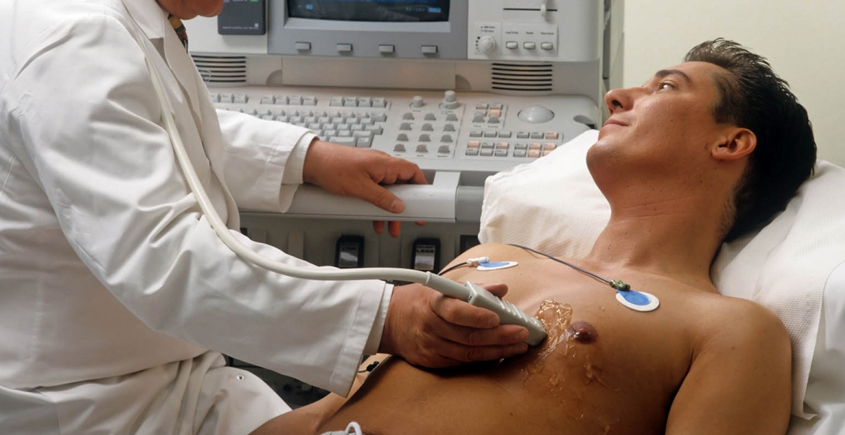
Echo is a fast and harmless test that provides important information about the heart.
Echo provides information on the following topics:
- heart valve diseases,
- Left heart enlargement,
- Clot in the left ventricle,
- EF (Ejection fraction): The human heart fills with blood and throws out a certain percentage of the blood in it by contraction. The percentage of blood that the heart
- throws into the vessels with each heartbeat is called "ejection fraction". Normal is 55% and above.
- heart wall movements,
- Heart chamber sizes,
- Pressures within the heart and much more information.
The technique used in echo can be explained as follows:
- Ultrasound is used. Ultrasound is a sound beyond the hearing limit of the human ear (18 000 - 20 000 cycle/sec).
- These sound waves are sent to the heart with the help of a sound-sensitive tube-shaped device that is held by hand and moved around the patient's chest.
- Sound waves return to the device through the heart walls, muscles and valves.
- The sound waves returning from the heart are converted into pictures by a computer and printed on paper if desired, as well as viewed on the monitor.
The advantages of this test are:
- It is available in many clinics.
- No paint or radioactive elements or needles are used. There is no pain.
- It is a cheaper test than the MUGA test and can be done in most places.
The disadvantages of Eco are:
- The ability of the tester affects the accuracy of the test results.
- It is not a suitable test to examine the right side of the heart.